Am Ende der Promotion – ein Blick zurück und nach vorn
Vor drei Jahren erzählte die damals 21‑jährige Sonam in einem Interview, warum sie sich für eine Promotion in Merseburg entschied, welche Herausforderungen sie bewältigen musste und wie ihr Alltag zwischen Labor, Fitnessstudio und Malpinsel aussieht.
Heute, nach erfolgreichem Abschluss ihrer Dissertation zum Thema „Drug‑Conjugated Ruthenacarboranes: Toward Hybrid Pharmaceuticals with a Dual Mode of Action“, fragt Maria Löffler (Projektkoordination und Referentin für wissenschaftliche Nachwuchsförderung und CASE-Projektkoordinatorin) noch einmal nach. Im Interview berichtet Sonam welche wissenschaftlichen Meilensteine sie erreicht hat, welche persönlichen Erkenntnisse sie gewonnen hat und welche nächsten Schritte sie plant.
Sie überlegen zu promovieren – egal ob an einem unserer zwei Promotionszentren oder in Kooperation mit einer Universität – haben Fragen zu Ihrer Promotion oder möchten sich gerne über die Angebote der Graduiertenakademie informieren?
Dann besuchen Sie unsere Website.
-----------------------
At the End of the Doctorate – A Look Back and Ahead
Three years ago, Sonam, then 21, spoke with Maria Löffler in an interview about why she chose to pursue her doctorate in Merseburg, what challenges she expected to face, and what her daily life looked like between the lab, the gym, and her paintbrush.
Today, having successfully completed her dissertation on the topic “Drug-Conjugated Ruthenacarboranes: Toward Hybrid Pharmaceuticals with a Dual Mode of Action,” Sonam reflects on her journey. In this interview, she discusses the scientific milestones she has achieved, the personal insights she has gained, and her plans for the future.
Are you considering pursuing a doctorate—whether at one of our two Doctoral Centers or in collaboration with a university—do you have questions about your doctoral journey, or would you like to learn more about the Graduate Academy’s offers?
Then visit our website.
Interview mit Sonam
Four years doing your doctorate – what has been your personal highlight during this time? Which moment made you especially proud?
One of the biggest highlights of my doctoral journey was when my first publication was accepted. Seeing my research recognized after months of hard work was incredibly rewarding. It became even more special when my work was selected for the cover page, that moment truly felt like a milestone in my academic career. I felt especially proud when I had the opportunity to present my research at national and international conferences. Sharing my work with experts in the field and engaging in meaningful discussions was both exciting and validating. Winning the European 360RG-CHEM Challenge, Poland and Researcher Night, Germany were particularly unforgettable experiences. These moments made me realize that all the dedication, long hours, and perseverance had truly paid off.
How would you describe the development of your research question since the first interview in 2023?
Oh! Yeah, since the first interview, my research question has evolved significantly. Throughout my doctoral journey, I gained valuable experience and developed a deeper understanding of my field. This allowed me to refine my research focus and approach it in a more structured and innovative way. There were also unexpected twists when my reactions were not working for more than year which ultimately strengthened my work because I learned new methodologies, explored different perspectives, and became more confident in integrating interdisciplinary ideas into my research. Overall, this development not only improved the quality of my research but also helped me grow personally and professionally.
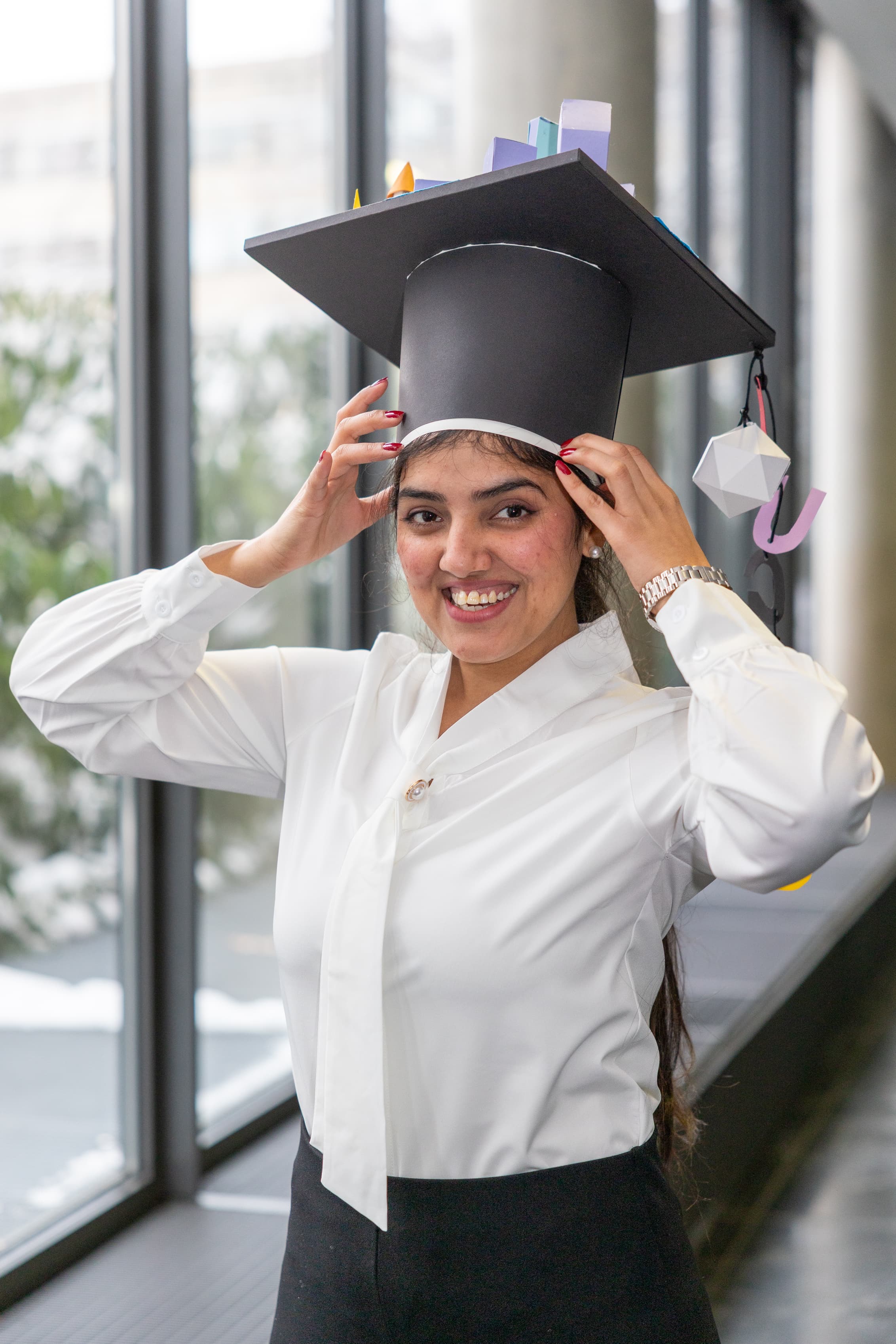
Sonam freut sich über die erfolgreiche Promotion / Sonam is pleased with the successful promotion
Which specific results would you like to highlight in particular?
My work focused on developing carborane-based drug conjugates with potential anticancer applications. In total, I synthesized 27 novel carborane derivatives. Among them, three compounds showed the most potent activity against A549 lung cancer cells. What I find particularly interesting is their mechanism of action, which is quite cool to me and that was my highlight result. By the way, all of my results are in three publications in ChemMedChem, the Journal of Inorganic Biochemistry, and Molecules, all of which are available as open access, if anyone is interested in reading them.
Which skills have you particularly expanded over the time of your doctoral studies?
I have significantly strengthened my science communication, leadership, and mentoring skills. I presented my research not only within my scientific community but also to broader audiences, which helped me learn how to adapt complex scientific concepts to different levels of understanding. I also supervised bachelor’s students during their practical courses and guided master’s thesis projects. This experience was both challenging and rewarding. It allowed me to develop leadership skills, improve my ability to guide others scientifically, and understand how to motivate and support students effectively. It was a great learning experience and honestly, a lot of fun as well.
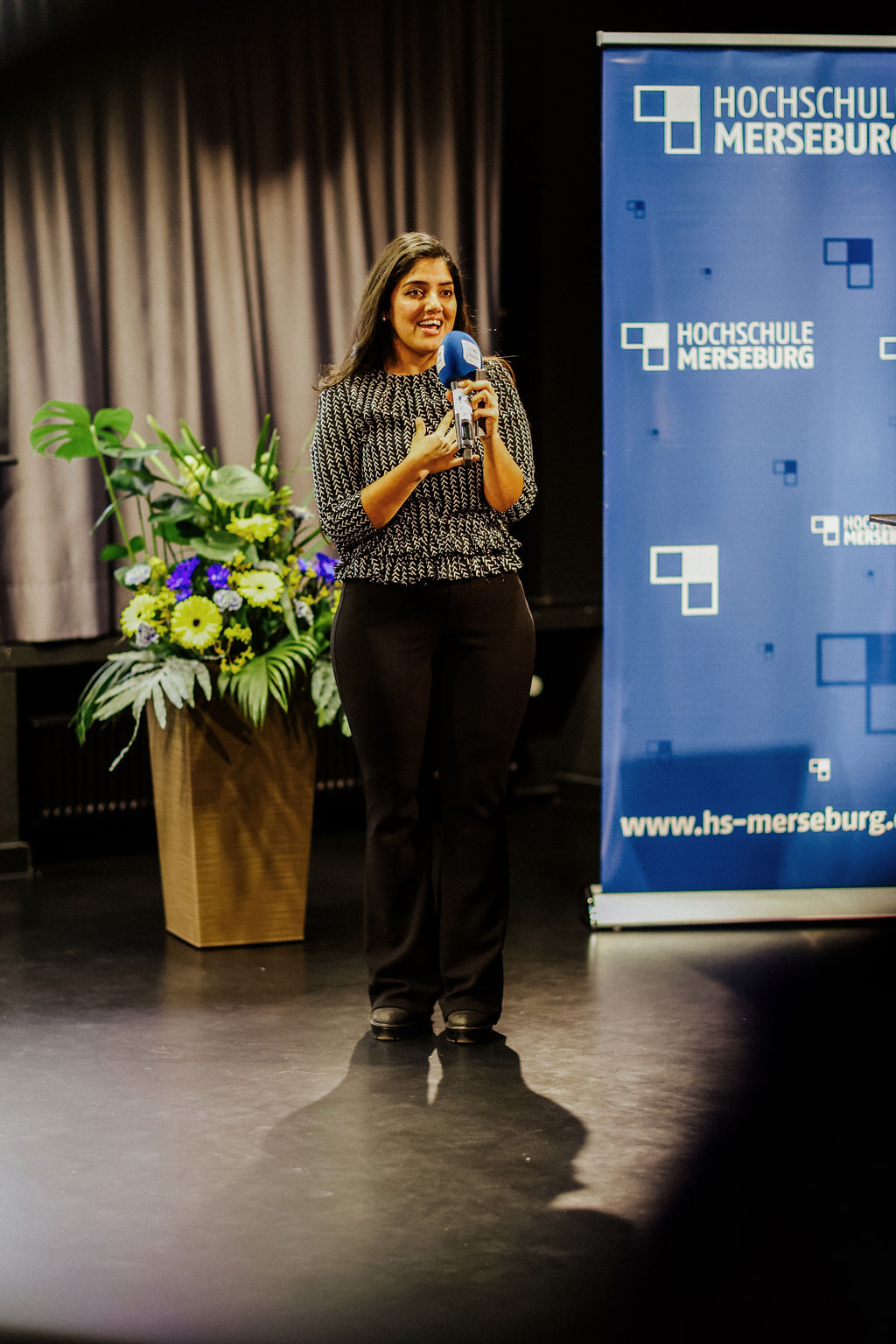
2024 wurde Sonam in der Kategorie Promovierende mit dem Forschungspreis ausgezeichnet. Foto: Anne Schwerin / In 2024, Sonam received the research prize in the doctoral candidate category. Photo: Anne Schwerin
How has your self‑understanding as a scientist changed?
Has changed profoundly, I learned that research is not a straight path, there will be many failures, sometimes more than you can even imagine. As I said before, I was stuck in my research for more than a year without seeing significant progress. That period taught me one of the most important lessons of my PhD: what truly matters is consistency and resilience. However, persistence does not mean random trials. It means working with a clear scientific strategy, carefully analyzing results, including failed experiments and learning from them. Tracking unsuccessful results is just as important as celebrating successful ones. Eventually, by staying consistent and thinking critically, you begin to see new directions and solutions. This experience shaped me into a more patient, analytical, and resilient scientist.
You have already mentioned your social‑media activities. How have they affected your visibility and your network?
Before starting my PhD, I was quite camera-shy. However, during my doctoral journey, I decided to join Instagram to share my experiences in research and studying abroad. Over time, my account has grown to more than 15,000 followers. Many students and early-career researchers reach out to me with questions about PhD life, research challenges, and studying abroad opportunities. This has significantly expanded my professional network and increased my visibility beyond the traditional academic environment. Engaging on social media has not only helped others but also helped me grow personally, especially in terms of confidence, communication skills, and public engagement. Looking back, joining social media was definitely worth it.
What is your long‑term vision for your research? What is your next career step?
My long-term vision is to develop more effective and targeted drugs for biomedical applications, especially in cancer therapy, with the goal of contributing to real clinical impact. I am aiming for a postdoctoral position. I currently have a few offers and am carefully deciding which one best aligns with my long-term research goals.
What concrete advice would you give to someone who is currently planning a doctorate in Germany?
Germany is very student-friendly and offers excellent research infrastructure. It is also centrally located in Europe, which is great for networking and travel opportunities. My advice would be to carefully choose your supervisor and research group, stay organized, and be prepared for both independence and responsibility during your PhD journey.
What role has the CASE project played in your success?
I am very grateful to the CASE project for funding my research. The financial support was essential and formed the foundation of my PhD work. At the same time, I believe that three years of funding can be quite short for doctoral research, especially for international students who rely entirely on this support. Extending the funding period would greatly help foreign students focus more on research without financial pressure.
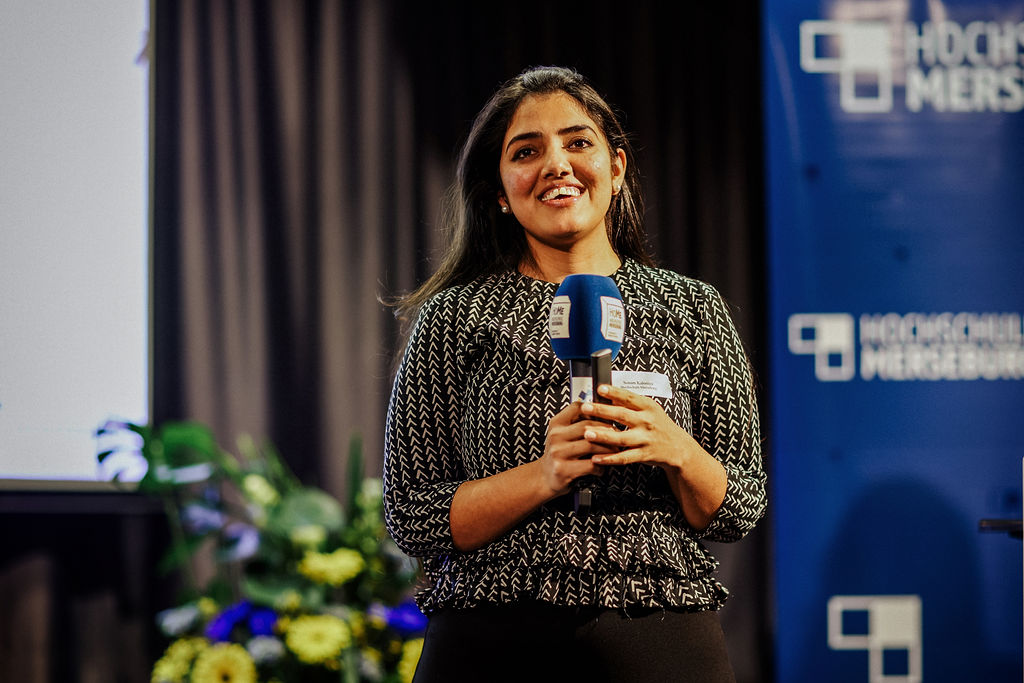
Foto / Photo: Anne Schwerin
Would you like to thank anyone else?
I would like to sincerely thank my supervisors, Prof. Goran Kaluderovic and Prof. Eva Hey-Hawkins, for their continuous guidance and strong support throughout my PhD. I am also grateful to my colleague Christoph, who helped me greatly with scientific discussions, especially when my research felt stuck. On a personal level, I would like to thank my family. My father always dreamed of seeing “Dr.” in front of my name. Sadly, I lost him during my PhD, and I deeply wish he could have seen this moment. I miss him very much. My mother and brother have been my emotional strength throughout this journey. My brother, being a science student himself, has always guided me carefully and supported me like an eagle eye.
In our last interview you mentioned “There's a lot of paperwork in Germany. If you could reduce that, it would be very nice.” Have the administrative hurdles improved since then?
Well, it was you, who were doing most of the stuff and I have had a very positive experience with you and the administrative process. From the beginning, I always received quick responses and kind support, which made everything much easier for me. My time at Merseburg University of Applied Sciences was a wonderful and meaningful experience where I grew academically and personally while building valuable friendships.
