Betriebliche Führungsgrundsätze und Führungskräfteentwicklung
Wie hoch der Automatisierungsgrad auch sein mag, der Produktionsbetrieb wird letztlich immer durch Menschen gestaltet und umgesetzt. Deshalb ist und bleibt Führung der entscheidende industrielle Erfolgsfaktor – auch und gerade in Krisen- und Transformationszeiten. Eine flächendeckend hohe Führungsqualität ist nur durch betriebliche Führungsgrundsätze und eine darauf aufbauende systematische Führungskräfteentwicklung zu erreichen.
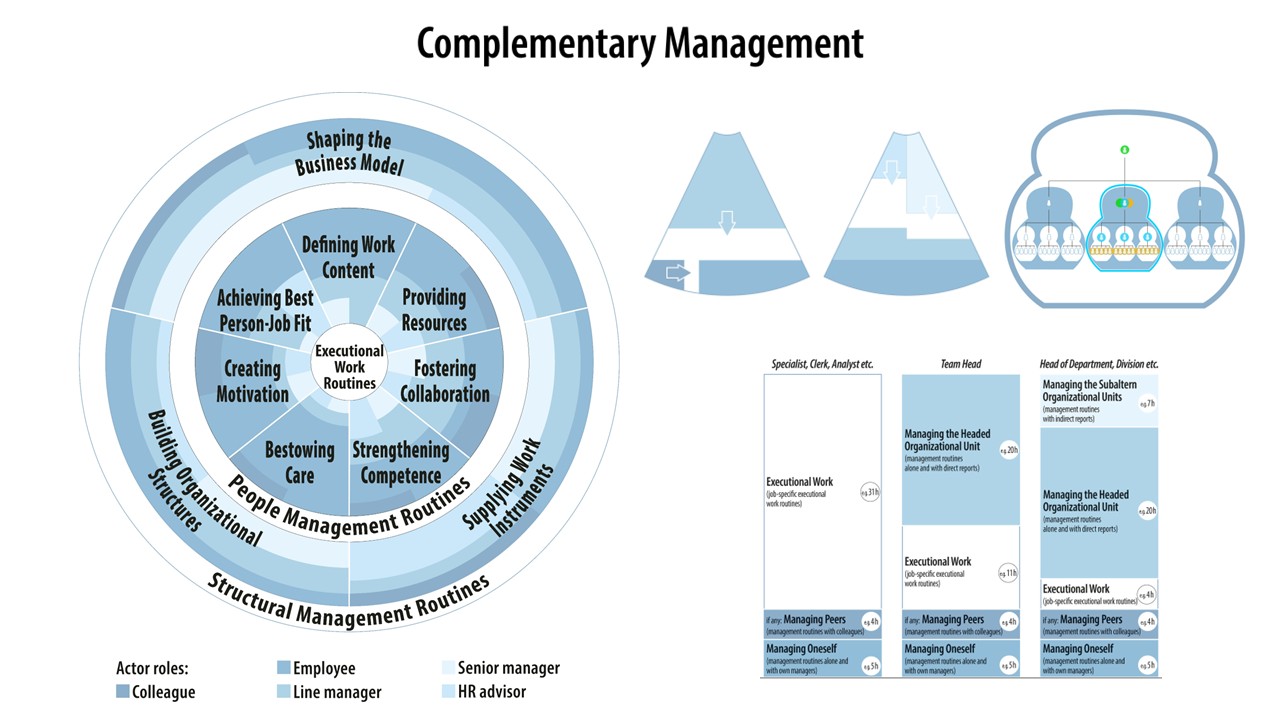
Das Modell der Komplementären Führung bietet eine optimale theoretische Grundlage dafür, unabhängig davon, ob sie aufwändig oder schlank umgesetzt werden. Mit seinen drei Modellelementen beschreibt es die hierfür maßgeblichen Aspekte, die unternehmensspezifisch zu konfigurieren gilt:
- die strukturellen und personellen Führungsaufgaben, welche die durch Führung zu schaffenden Rahmen- und Leistungsbedingungen aufzeigen;
- die sich ergänzenden, an kontrollierter Selbstführung und bedarfsorientierter Intervention ansetzenden Führungsakteursrollen;
- die den Kalender füllenden Regel- und Bedarfsroutinen (= Aktivitäten), in denen diese Aufgaben und Rollen umgesetzt werden.
Diese drei zeitlosen und generalisierbaren Spezifikationen bieten die notwendige Orientierung für das individuelle und situative Führungsverhalten im Alltag. Mit ihnen wird der Führungsberuf wesentlich konkreter und umfassender beschrieben, als dies üblicherweise geschieht – und damit ähnlich präzise und prüfbar wie andere Produktionsabläufe. Am Stand bietet sich die Gelegenheit, sich zu informieren und mit dem Entwickler des Modells ins Gespräch über Anwendung, Führungsprobleme und Forschungsprojekte zu kommen.
Corporate Management Guidelines and Manager Development
However high the degree of automation may be, industrial production operations are ultimately always designed and implemented by people. That is why management and leadership is and remains the decisive factor for industrial success – even and especially in times of crisis and transformation. A high level of managerial quality across the board can only be achieved through corporate guidelines of management and leadership as well as systematic manager development based on these guidelines.
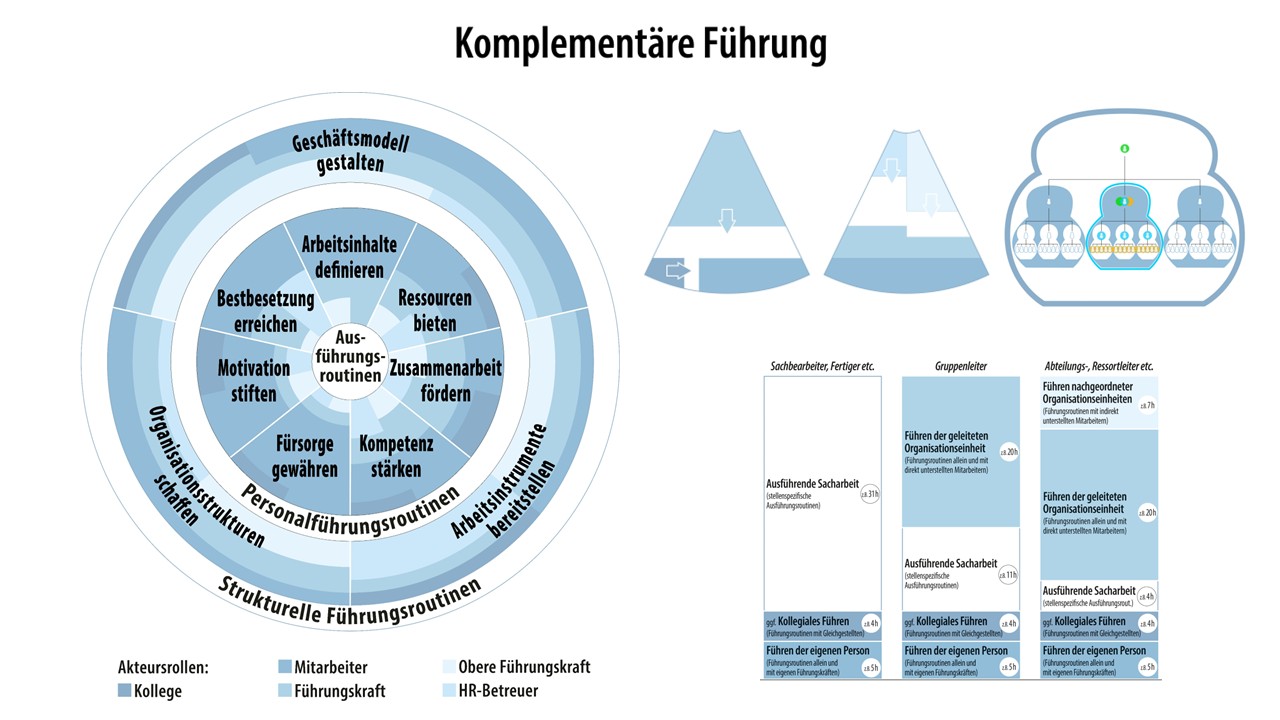
The Complementary Management model offers an optimal theoretical basis for this, regardless of whether it is implemented in a complex or lean manner. With its three model elements, it describes the relevant aspects that need to be configured specifically for each company:
- the structural and people management tasks that define the framework and performance conditions to be created through management and leadership;
- the complementary management roles based on controlled self-management and needs-oriented intervention;
- the regular and on-demand routines (= activities) that fill the calendar and in which these tasks and roles are implemented.
These three timeless and generalizable specifications provide the necessary orientation for individual and situational management and leadership behavior in everyday life. They describe the managerial profession in a much more concrete and comprehensive way than is usually the case – and thus with a similar degree of precision and verifiability as other industrial production processes. The exhibition stand offers an opportunity to find out more and talk to the developer of the model about its application, managerial problems, and research projects.